

Mathematics and Physics
The department conducts research in applied mathematics and technical physics.
Staff
Department of Mathematics, Physics and Chemical Engineering

- Head of Department
- School of Engineering
- jorgen.gustafsson@ju.se
- +46 36-10 1617
- Associate Senior Lecturer
- School of Engineering
- fredrik.abrahamsson@ju.se
- +46 36-10 1620
- Assistant Professor of Physics
- School of Engineering
- martin.albertsson@ju.se
- +46 36-10 1242

- Assistant Professor
- School of Engineering
- arpan.ghosh@ju.se
- +46 36-10 1362
- Lecturer
- School of Engineering
- asa.hansen@ju.se
- +46 36-10 1645

- Senior Lecturer
- School of Engineering
- tjavdar.ivanov@ju.se
- +46 36-10 1623
- Lecturer
- School of Engineering
- christer.magnusson@ju.se
- +46 36-10 1619
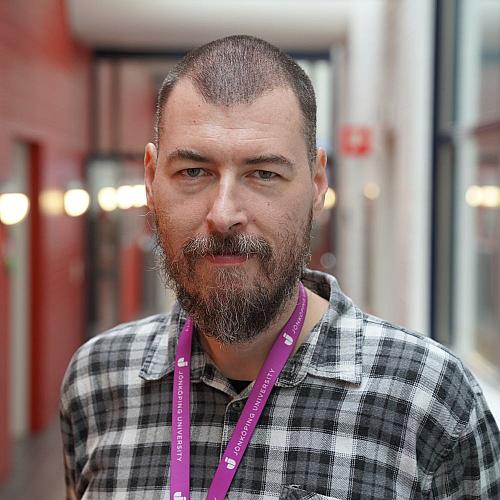
- Assistant Professor
- School of Engineering
- mitja.nedic@ju.se
- +46 36-10 1335

- Full Professor
- School of Engineering
- peter.olofsson@ju.se
- +46 36-10 1379
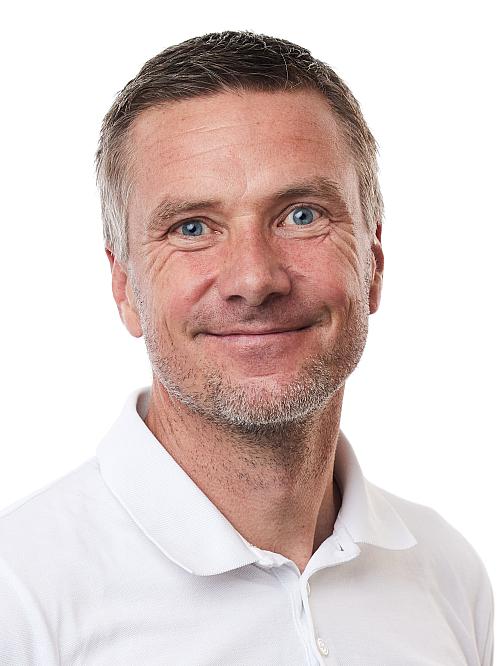
- Lecturer
- School of Engineering
- mikael.palmgren@ju.se
- +46 36-10 1647

- Lecturer
- School of Engineering
- par.sandstrom@ju.se
- +46 36-10 1938
- Lecturer
- School of Engineering
- johan.strandler@ju.se
- +46 36-10 1616
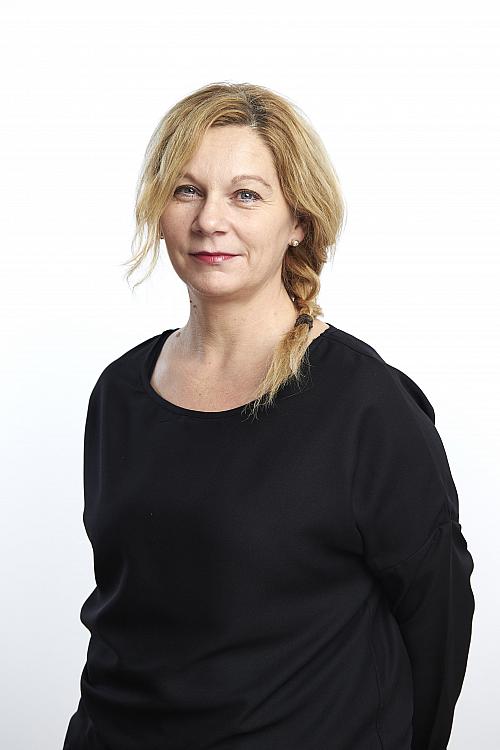
- Lecturer
- School of Engineering
- jonelija.zelic@ju.se
- +46 36-10 1649
Projects
In mathematics, and physics, the following research is done at the School of Engineering.
Stochastic models for population dynamics
Branching processes are a class of stochastic models that are based on reproduction and behavior at the individual level, from which conclusions are drawn about the population as a whole. Ongoing research projects address (1) accumulation of mutations in shrinking populations, (2) dynamics of prions (potentially pathogenic proteins), (3) persistence (a non-hereditary transient condition) to antibiotics in bacteria.
For information, contact Peter Olofsson (1,2 och 3) eller Arpan Ghosh (2).
Stochastic Models in Materials Science
Crack propagation and crack branching are well-known phenomena in materials science, particularly in brittle metals and alloys. We intend to study them using stochastic models based on branching processes and Poisson processes, and to test the validity of the models through various kinds of experiments in collaboration with members of the Department of Materials and Manufacturing.
For information, contact Peter Olofsson
Modelling blood flow through elastic blood vessels
Development and analysis of a mathematical model of blood circulation within blood vessels in the human vascular system. Asymptotic methods are used to derive one-dimensional models of arteries that takes into account the information about its complicated geometry and elastic properties. The model equations which consist of coupled systems of partial differential equations, are studied and used for simulations.
For information, contact kontakta: Arpan Ghosh
Modeling fission and fusion of atomic nuclei
Theoretical studies of fission of heavy atomic nuclei, with a focus on the mechanisms that control the deformation and division of the nucleus into fission fragments, as well as fusion for the formation of new elements.
For information, contact kontakta: Martin Albertson
Herglotz-Nevanlinna functions: representations and applications
Herglotz-Nevanlinna (HN) functions are holomorphic functions defined in the complex upper half-plane. These functions appear within various subjects in complex analysis and operator theory, as well as in modelling certain electromagnetic phenomena in circuits, antennas, or metamaterials. The ongoing research projects concern primarily the continued study of representations of HN functions using self-adjoint linear relations or positive semi-definite functions.
For information, contact kontakta: Mitja Nedic
Mathematical modeling and numerical methods for acoustics and electro-dynamics
In cooperation with ICMM, the International Center for Mathematical Modeling, at Linnaeus University, Växjö, Sweden, research is done regarding development of mathematical models and numerical methods for acoustics and electro-dynamics. In particular, numerical methods for conformal mappings are developed.
For information, contact Anders Andersson or Thomas Biro.
Approximate Approximations
Approximation with non-local base functions, algorithms for multiresolution decomposition, semi-analytic methods for calculations of non-homogeneous linear partial differential equation potentials.
For information, contact Tjavdar Ivanov.
Publications
- No publications found.
Strategic Partners








.png)
Partners: 1000+ companies
Accredited within collaboration
%20(1).png)